
A deep look at the screenshot tool on your Mac and how you can use it to capture and record your screen in various ways and with various workflows.
▶ You can also watch this video at YouTube.
▶
▶ Watch more videos about related subjects: Screenshots (8 videos), System Settings (184 videos).
▶
▶ Watch more videos about related subjects: Screenshots (8 videos), System Settings (184 videos).
Video Summary
In This Tutorial
Learn how to use all the features of the Mac Screenshot Tool to take screen captures, record your screen, change options, mark up images, save to different locations, and create efficient workflows for screenshots and screen recordings.
Checking Your Screenshot Keyboard Shortcuts (00:35)
- Go to System Settings > Keyboard > Keyboard Shortcuts > Screenshots
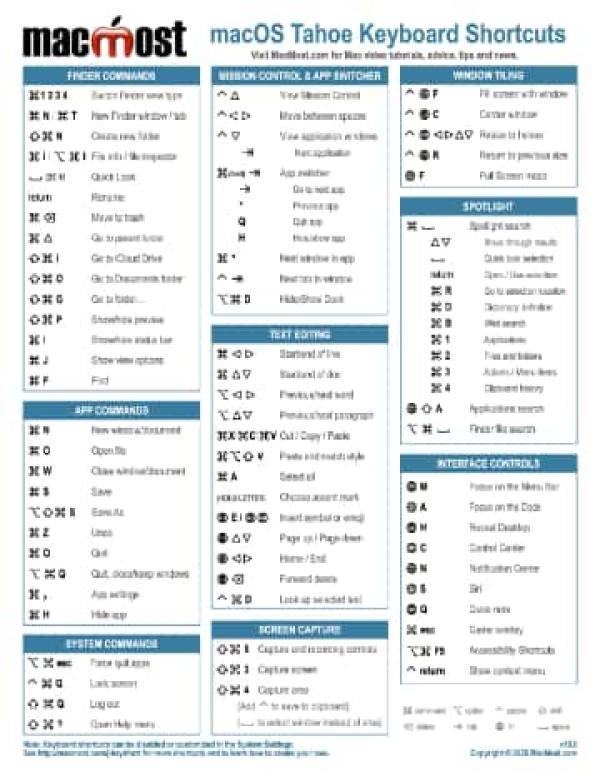
- Check the 5 main shortcuts; Shift+Command+5 opens the full Screenshot Tool
- Shift+Command+3 captures the screen; Shift+Command+4 captures a selected area; add Control to copy to clipboard
- Verify shortcuts if Shift+Command+5 isn’t working, as they may have been customized
Screenshot Tool Basics (02:40)
- Press Shift+Command+5 to open the Screenshot Tool toolbar
- Drag the toolbar to reposition; press Escape or click X to dismiss
- 6 options: capture screen, window, portion, or record screen, window, portion
- Tool remembers last selected mode
Screenshot Tool Options (04:24)
- Options menu: Save To, Timer, Show Floating Thumbnail, Remember Last Selection, Show Mouse Pointer
- Can capture multiple displays; click a screen to capture just that one
- Return or Enter triggers Capture button when active
Capturing the Screen As An Image (05:33)
- Click on a screen or press Return to capture
- Multiple monitors capture all screens unless you click a specific screen
- Floating thumbnail appears by default; disappears after ~5 seconds
- Turn off Floating Thumbnail for instant saves
Using the Floating Thumbnail (07:21)
- Click it to open markup and sharing tools
- Options include Share, Trash, Done, and Markup (arrows, text, crop)
- Dismissing saves the file; Trash deletes it
- Skipped automatically if using Preview or Clipboard destinations
Setting the Save Location Of Screenshot Files (09:55)
- Options > Save To lets you pick Desktop, Documents, Mail, or Other Location
- Use “Other Location” to temporarily save all screenshots to a custom folder
- You can change locations frequently based on projects
Screenshot To the Preview App (11:52)
- Choose Preview in Options to send captures directly to an unsaved Preview window
- Allows immediate markup and the ability to name and save in any format (PNG, JPEG, PDF)
- Gives full flexibility without using the Floating Thumbnail
- Automatically switches to QuickTime Player if recording is selected
Screenshot To Clipboard (14:48)
- Choose Clipboard in Options to send captures directly to the clipboard
- Paste into any app with Command+V
- Skips Floating Thumbnail for faster workflow
- Shift+Command+5 then Command+C hijacks any capture to the clipboard
Capture Only One Window (16:03)
- Select “Capture Selected Window” and click the window, even if it’s behind others
- Includes window shadow by default
- Works with Floating Thumbnail or Preview options
Capture Selected Area (17:53)
- “Capture Selected Portion” gives crosshairs to draw a selection
- Can resize and reposition before capture
- Use Remember Last Selection for repeated captures of the same area
Recording the Screen To a Video File (22:21)
- Switch to record modes (entire screen, window, or portion)
- Options: Save To, Timer, Microphone source, Show Mouse Clicks
- Stop recording with menu bar button; Floating Thumbnail allows trim and share
Screen Recording To QuickTime Player (24:43)
- Save to QuickTime Player for instant playback and editing
- Can trim clips, export to different resolutions, and save where you choose
Screen Capture Workflows (26:14)
- Rapid-fire captures: set location and turn off Floating Thumbnail, then use Shift+Command+3
- Clipboard workflow: capture directly or hijack to clipboard with Command+C
- Thoughtful workflow: use Preview or Floating Thumbnail for markup and controlled saving
Recording Computer Audio (35:22)
- macOS only records microphone audio by default
- Use a free tool like BlackHole to route system audio into screen recordings
- Advanced third-party tools (OBS, ScreenFlow) can capture system audio directly
Changing the File Type Of Screenshots (37:35)
- Use Terminal to change default format: `defaults write com.apple.screencapture type jpg`
- Supported: PNG (default), JPG, PDF, GIF
- `killall SystemUIServer` for changes to take effect
Removing the Window Shadow (39:48)
- Disable with Terminal: `defaults write com.apple.screencapture disable-shadow -bool TRUE`
- `killall SystemUIServer` to apply
- Delete the setting to restore shadows
Questions (41:13)
- Timer is rarely needed but useful for menus or setups that change after a shortcut
- Preview lets you name files and set formats
- Respect restrictions in apps like Zoom; ask hosts for recording permission
- Can add narration later in iMovie or QuickTime Player
Adding Screenshot Buttons to the Dock and Menu Bar (43:00)
- Drag Applications > Utilities > Screenshot.app to the Dock
- Add capture controls to Control Center or Menu Bar in System Settings > Control Center
Summary
Learned how to access the Screenshot Tool, use all capture and record modes, customize save locations, use Preview and Floating Thumbnail for markup, create rapid or thoughtful workflows, record audio, change file types, remove shadows, and add quick access buttons to Dock or Menu Bar.
Video Transcript
Hi everyone, this is Gary with MacMost.com and here's another live episode.
This time I'm going to talk about using the screenshot tool on your Mac.
We're going to take a deep dive into it.
So the screenshot tool is how you capture the screen either as an image or do a screen recording.
It's got a few different modes, a ton of different options, and lots of different ways to use it.
So let's start by taking a look in system settings.
And system settings is where you're going to find the keyboard shortcuts to trigger the screen capture tool.
So it really is a keyboard launched kind of thing.
So you need to know the keyboard shortcuts for it.
And there are five.
If you go into the keyboard section here, You'll see keyboard shortcuts, click on that, and then go to screenshot.
It has a whole category here, and you'll see these five.
Now, I always start by talking about these because it's important to know what these are.
A lot of times, people change them to customize them, maybe years ago when they needed to do something, and they forgot they changed them.
So then I start talking about Shift+Command+5, and it's not working for them.
So it's important to start off by checking to see if you're using the defaults or maybe you've customized them.
These are the defaults.
Now, the first four shortcuts go directly to a particular way of using the Screenshot tool.
You can see the first one, for instance, is Save Picture of Screen as a File.
Second one is Copy Picture of the Screen to the Clipboard.
Third is Save a Picture of the Selected Area as a File.
And then the fourth is Copy Picture of Selected Area to the Clipboard.
And there's a logic to these.
Shift-Command-3 is for the screen.
Shift-Command-4 is for a selected area.
and then add the control key and you get copy of clipboard instead of as file.
But the one we're going to use the most is this fifth one because this gives you access to the full tool with all of the options.
I had shift command five.
It's basically the only thing I ever use because I really want all of the options available to me and I only go to one of these four if I need to do a whole bunch of screenshots in a certain way that fits one of these and do it rapidly without the rest of the interface.
But for most people, forget the first four and just remember Shift + Command + 5 will get you to the screenshot tool and probably a step or two away from getting your screenshot.
So with that out of the way, let's see what happens when we use this tool here.
So I'm going to use Shift + Command + 5.
And you can see my keyboard shortcuts, they should show up on the screen here at the bottom left corner.
So this brings up the Screenshot Tool, which is this toolbar here at the bottom.
You can move it around, you can grab some area that's not in use by a button, move it around so if it's in the way, you can get it out of the way.
And it has a sneak feature in macOS Tahoe where you kind of can snap it back to its location at the bottom of the screen.
And you've got an X button here.
You can click that or just press the escape key and it dismisses it so if you accidentally trigger it, you can easily get it out of the way.
Then there are six different main options.
The first three are for capturing the screen.
You've got capture the entire screen, capture a selected window, capture a selected portion, so define an area of the screen.
Then the next three are for recording, and they're the same areas.
Screen, Window, and Portion.
Window is kind of new.
It's, I believe, new in Mac OS Tahoe.
So recording the window is new.
Capturing as an image to the window is not new.
That's been around for a long time.
So you can choose which one of these you want, but it's going to remember the last one you chose.
And this Capture button here and the pointer control, You can see it's a camera here.
That will remember.
So if the last thing I did was capture the whole screen, when I use Shift + Command + 5, it's going to have that highlighted and I could capture the screen.
In addition to the six modes, you've got options.
And there's a bunch of different options.
There's Save To, there's the Timer option, there's additional ones here, which are check marks, and there's whether or not the mouse pointer is captured as well.
And you can change these by selecting them.
So I can say, oh, I want to see the mouse pointer.
So I will select that and you can see now it's got a checkmark next to it.
So you can use these options for more things.
The capture button is sometimes there, sometimes it depends on whether or not it will do, you know, there can be something done with just a button.
When this button is here, you can use the enter or return key on your keyboard to actually activate it.
So I have capture entire screen selected here.
I can just use return and it will capture the entire screen using these options.
The options I've got here are set to the defaults, I believe, save to the desktop, no timer, show the floating thumbnail, and it may be that show mouse pointer is a default there.
So if I do Shift + Command + 5, I can simply hit return or Enter and it will capture or click here to capture.
Note that if you've got multiple screens on your Mac, using the Capture button or Return or Enter will capture both screens or all three, however many you've got.
If you want to just capture a particular screen like this one, then you could just point at it.
You can see the pointer is now a camera and clicking here on this screen will capture just the screen.
I have actually another screen you can't see.
If I were to go over to that, click on that, it would capture that screen instead.
So you've got a lot of different options here.
Let's actually try these with these options set, and you could see what happens here.
I'm going to click on the screen and you'll see the floating thumbnail.
It's underneath me.
You could see it right down here, just underneath me there.
If you click on that floating thumbnail while it's still there, because it disappears after I think five seconds, then it brings up this tool here.
Let's not look at that right now.
I'm gonna close that and instead we're going to, you can see how by closing it just appeared here.
I'm gonna do a lot of dragging into the trash to clear things off during this tutorial.
Let's do shift command five and then I'm gonna click on the screen here and I'm not gonna do anything with that floating thumbnail.
That's under me right here.
I'm gonna wait and there it goes.
It appears here at the location I wanted, which it saved to my desktop folder.
So I could just do that.
I could do it rapidly too.
So if I did one click, another one click, then it will actually get both of those, even though the floating thumbnail is causing this delay here.
So you could see you got both of those there.
So that's one way to do it.
Now, the floating thumbnail, what does that really get you? Well, if you click here, you click on the floating thumbnail, you've got options now.
Now, we already looked at, you could just dismiss the floating thumbnail and then it's saved.
We also can go to the trash button here at the top right.
If I click that, it deletes the thumbnail.
So the floating thumbnail, or sorry, deletes the screenshot.
It doesn't save it.
So the floating thumbnail does give me this great option to be able to check my screenshot, see if I got what I wanted.
And if I didn't, I can click the trash can.
I could also click Done, it's the same as dismissing it here, and it saves it to the location.
But I could click the Share button here, and I could do lots of things for sharing.
Like I could share by AirDrop, I could start a mail message with the images and attachment.
I can go to the preview app, open up and basically create a new image and open it in preview.
I can share by messages, lots of other things, including copy for to the clipboard, although the easier ways to do that I'll show you soon.
Now, you've got those options and that's really good.
But in addition to that, you also have the markup tools.
Click this button here and that brings markup tools at the top.
So you could draw, you can create shapes like arrows, you could add text boxes and type text in the boxes.
You can do all sorts of different things.
I'm not gonna go into the markup tools here.
I've done tons of tutorials in the markup tools, but there are lots of things you can do.
Here, you can even crop, and then crop to the area that you want, like that.
Crop, and you're still in the markup tool here, and you can continue to do text and do all sorts of things.
So that's really useful, because a lot of times we wanna take a screenshot, we wanna point to something, add some text, do a bunch of things, and then if I click Done here, then it saves it to my location.
You could see there's the file, if I quick look at it, you could see it saved the markups there.
So, that's one way to mark it up.
I'm going to show you a better way to mark it up.
But let's say you don't want the floating thumbnail.
You could turn that off.
And the advantage to turning it off is there's no delay.
If I click here, it immediately saves the screenshot to the desktop or wherever I've set it to.
So that's really cool.
The other thing you could do is you could change where it saves.
So I have it set to desktop.
Let's, we could set it to documents.
It'll just save at the top level of the documents folder.
We can have it saved to screens.
What is screens? You won't see screens because screens is custom.
I created that.
If you go to other location here, you can now choose someplace.
So I could choose save by examples folder in my documents folder here.
I will choose that.
Now notice the third item is examples.
So if you want to save your screenshots to a specific folder, you can by using other location and that becomes the third option and you could switch away from it and switch back to it easily.
And I didn't save it.
Well, I thought you could.
Let's see here if I do current stuff choose and there it is.
I think maybe you need to use it once, let's use it once.
Now it's gonna save to that folder.
Now if I do this, you can see current stuff is there, let's switch to documents and switch back.
No, it got rid of it.
I wonder if the functionality changed there.
But you can always use other location, select another location to save it to there.
It's really easy to do, so I recommend doing it if you're doing a project where it's like I need to save a bunch of screenshots.
I'm gonna be screenshotting all day.
I'm going to a creative folder for these screenshots, set this other location, use it, it's not permanent.
You can just change back to desktop, change to documents later, change to another location later.
So don't feel like this is like, well, once I've set it, I can't set it again.
You could just change this all the time.
I do.
If I'm doing a project, I will change the screenshot location to a specific folder, and then change it the next time I'm doing a project.
You can also go directly to mail, so to create a new mail message with the attachment.
Another cool thing you could do is go to preview.
This is different than the others because this isn't going to save or in case of mail, create a new document.
This is going to create a new preview document, but not save it.
I click here and it's going to open preview with an untitled document.
There it is, and there's my screenshot.
Now, this is really useful because you've got the markup tools here as well.
It feels a lot like the thumbnail, but instead of having to click the thumbnail, it just instantly opens up in preview.
So you can now mark up right away, no extra steps involved.
You could also save, you can do File and Save or just click Command + S to save.
And the cool thing is, now you get to name it and set its location.
So this is like saving a regular file.
So if you're doing something where every time you take a screenshot, you want it to name it, you want to pick where it goes and all of that, choose preview.
And then you get this functionality really quickly.
It's like, I'll not save this, which is another thing you could do.
I'll say, oh, screenshot, click the screen.
It's going to open it up in preview here.
And now I can command S and I can choose where to save it, what to name it.
I can even choose the format.
So I can say, oh, I want this one to be JPEG, but the next time I want PNG, maybe another time I want it as a PDF for some reason.
So you get lots of different options here.
When you go to JPEG, you could set the quality to make it lower quality if you want, but a smaller file size.
So lots of cool options.
if you use preview as your way to, what to do after the screenshot is taken.
So, I'm gonna do point out one thing here, because the number one thing I get when I talk about setting this to preview is people saying, I don't see preview as an option.
Here's the thing, preview is for images.
If you choose one of these recording options, which we'll look at in a minute, you won't get preview, you get QuickTime Player.
QuickTime Player handles video.
It remembers preview and switches to QuickTime Player if you go to recording.
And if you select QuickTime Player here and you go back to screenshots, it remembers preview.
So this option here isn't really about preview or QuickTime Player, it's really about use the default app for that type, not really the default app 'cause it's only preview or QuickTime Player, but it'll switch between these.
So if you see QuickTime Player here, it just means you happen to right now have a recording option set.
Switch to screen capture, and now you'll see it changes to preview.
So you've got that.
The other option is here, you can do clipboard.
If you set this to clipboard, now when you click, it doesn't look like anything happened, but you've actually saved this to clipboard.
So I can go into another app.
Let me go into Notes as an example here.
I've got that on my other screen.
And so I'm here, so I just took that screenshot.
I could do Command + V to paste it.
I could be pasting it to anything.
I could paste it into an image editing app.
I could be pasting into mail, a special messaging app.
I'm using whatever it is.
If you've got the screenshot tool set to go to clipboard, it will just go to clipboard.
It'll skip the floating thumbnail and all of that.
It also skips the floating thumbnail, even if you've got this turned on, if you haven't set to clipboard, I believe.
Let's see, do that.
Yeah, just goes right to clipboard, no floating thumbnail.
Same thing if you set this to preview and you've got show floating thumbnail on, it'll skip that 'cause it's kind of redundant, right? Click and it's going to just go right to preview because it realizes that it's kind of redundant to go to the floating thumbnail.
When you're just gonna go to preview, you've got even more options there.
So note that, now let's take a look at some of the other options here.
You've got capture selected window.
So to use that, let's bring a window in.
So I'll just bring in a little finder window here.
So if I now change to capture selected window, notice I can click on the window.
So I initiate the tool, I click on the window I want, and it will take the screenshot.
In this case, I had it set to go to preview.
There's the window in preview.
Why so much space around it? Because it captures the shadow around the window, which is really useful.
If you're going to paste this into something, the shadow, it's kinda neat to have there, cuz it really feels like the real window.
But I'll show you later how to get rid of that if you want.
But if you do the floating thumbnail, let's change the options here to to the desktop and floating thumbnail is on.
So now I click here and you get the floating thumbnail right behind me and I can click on it and I can go into the tool here, the floating thumbnail tool, and I can mark it up or whatever and dismiss it and then it is now a file there.
So that's how you do the window.
And if I have multiple windows, It doesn't care that something is on top of it.
So it's not doing like, I'll go into a folder here.
If I do, let's get this window.
This is covering it.
So a less sophisticated screen capture tool may actually just get the area of the screen that contains this window.
But this actually will grab the window even though it's behind something on the screen.
So that's useful.
The capture selected portion that when you use it, allows you now gives you a crosshairs and you could draw what you want.
And then you can modify the drawing like that.
And then you can click capture or just hit return or enter.
And it gets that section here.
Here's the floating thumbnail for it.
And you could see it got that section.
What's really useful is the option for remember last selection.
If you've got this off, remember last selection is off, that every time you use this tool, so shift command five, I can select, hit return or enter, and it captures.
Next time, I have to draw again.
But if I want exactly the same portion of the screen, I can go to options and say remember last selection.
Now let's now grab this right here.
I'll capture, it'll capture that.
Let's do it again and you could see it starts you off right there.
grab this and move it around, you can still resize it.
But it'll give you a single area of the screen.
So if you're capturing something going on in an app, you can just keep capturing the same section really easily by using this Remember Last Selection part.
So that's how you use that tool.
You set it up like you want.
And also you've got the Show Mouse Pointer tool, which is kind of obvious.
you can see here in this screenshot here, it captured the mouse pointer.
If you don't want the mouse pointer to ever be there, you just turn that option off.
So up to you.
One last option I want to talk about is the timer.
What's that about? Well, let's go ahead and let's say I want to capture the menu bar here, but I want to do it like this.
I want to show these options here.
If I do a Shift-Command-5, it's not really a good example because I can still capture it.
But sometimes you want to set things up just right.
Things will disappear, whatever.
So what this does is it captures a, gives you a five-second timer.
Let's switch over to capture the screen like that, and you can see capture five seconds, and now it's going to count down.
So I could position things as I want, get it perfect, like name selected right there.
And now you can see I get exactly that.
So that's a good example that just getting name selected and all.
There's other apps where times where hitting the keyboard shortcut is going to mean that the screen no longer looks right.
So you do a five second timer to give you five seconds to set things up or the 10 second timer for that.
That's all that that is really about there, the timer.
for screen recording.
First, I guess I should actually talk briefly about how MacMost is produced because it's produced thanks to Patreon supporters.
So there are more than 3,000 people that support MacMost through Patreon.
That's how the MacMost site is ad-free.
So you watch these videos at macmost.com.
They're no ads.
There's a newsletter I send out every Thursday that you can You can get a MacMost.com/newsletter that has no ads in it either.
So that's all because I have Patreon supporters.
And it's great to be able to do that.
I do no sponsors.
I don't take sponsorships.
You can't sponsor one of my videos or any of that stuff.
You can't give me free stuff and make me do a video on it.
I don't do any of that nonsense.
I basically get most of my support through Patreon.
YouTube shows my videos and they collect money for ads.
So if you watch them there, they're ads, and I do take a share of that.
But the main way I get supported is through Patreon.
So check this out.
Check out the macbooks.com/patreon because it tells you, you know, you get extra stuff.
I post two videos a week usually just to the Patreon supporters and also their course discounts and things like that.
So check it out.
Even if you don't think you'd be interested, just read what it's about.
maybe for future reference or to learn a little bit more about MacMost.
So let's now dig into screen recording.
Same tool here, just it's the next three options.
So you can record the entire screen.
So your options change here to where you can save.
It's a little bit different.
You can't go to clipboard anymore.
So let's do the desktop.
You can go to QuickTime Player and it works kind of like preview, where it's just going to open up QuickTime Player.
You get the floating thumbnail if you want it.
You also get a delay timer for starting if you want.
And you could choose a microphone.
So the idea here is that you're going to narrate what's going on.
You're doing the screen capture 'cause you say are gonna report a bug or you're gonna record a process for somebody to follow, right? You wanna tell somebody else you work with, here's how I do this.
And you send them a video.
So you use your microphone to be able to record your voice.
If you wanna record the audio going on on your Mac, That's a different story and I'll mention that process for doing that later.
You can also record mouse clicks.
So now I've got that set, I'm gonna try it.
I'm going to record and you get this little recording button here at the top right corner and now I'm gonna move things around so you can see that there's some action.
When I wanna stop, I click here and it stops, it gives me the floating thumbnail.
I can click on the floating thumbnail and I can now play this back.
I have a little timeline here at the bottom I could play to go through this.
And I can even airplay it if I want.
I could go here, I've got share, I've got trash, I've got done, I've got a trim tool.
Click here and how I can trim, so I have too much at the beginning, too much at the end, and I could trim it.
I can say done, and it saves it, and now I've got a video.
And there's the video of me doing that.
Cool.
It works the same if you choose a selected portion or a window.
So I can say, I wanna record this window.
And yeah, I can click and do all this stuff.
I get the little button up there.
I got the floating thumbnail.
And I just get the window complete with shadow.
So it's kinda nice.
You can use it as an iMovie overlay if you wanted to, because it's got a semi-transparent shadow around it.
So yeah, that is how that works.
If you want to say, have it go instead to QuickTime Player right away, for all those benefits you get with preview, you can do that.
So let's do, I'll do select a portion.
So I'll say, select a portion of the screen.
I'll just record this.
I'll say record.
I can move this around.
Notice how it keeps highlighting the portion of the screen that's being recorded to give you an idea.
so you don't go beyond the edges.
And I can click here to stop in the menu bar.
And now it goes right to QuickTime Player.
So QuickTime Player, of course, I can play it back.
I can do a save a Quick Command S for save and save it where I want with the name I want.
Oh, even, let's see, you don't have options here to change the format, but you can go to export as and export it at lower resolution than what you've got.
So you have that option.
You also of course have tons of tools in here.
For instance, you can do the trim tool, command T in QuickTime Player like that.
So yeah, you've got the ability to do all sorts of cool stuff with recording like that.
And yeah, you choose which, you notice it did remember which one I was using.
Uh, and it remembers the options.
Uh, I think that kind of is pretty complete here, but I do want to highlight some, some, uh, workflows because I think people learn all these things and then they don't see how you can kind of combine them for different workflows.
So for instance, let's say that you need rapid fire screenshots.
You want to capture the screen and you want it to go to a specific folder.
So I want to do other location and I will, uh, you know, look in here, uh, in my documents folder, and I think I have that screens, uh, screenshots there, screenshot folder, I'll choose the screenshots folder.
So that's set there.
I don't want a floating thumbnail.
Uh, I don't want to show the mouse pointer.
I set this all up.
So now I can do capture and it just captures.
Shift + Command + 5 and I could click on the screen.
Shift + Command + 5, click on the screen.
But remember those other keyboard shortcuts.
Let's go take a look at those again, keyboard, and then keyboard shortcuts.
Let's go here to screenshots.
Save picture of screen as a file.
Shift + Command + 3 gets me this with one step.
So now, Shift+Command+3, screenshots, and it's going to that screenshots folder.
So we can actually monitor this.
Shift+Command, I don't need to do Shift+Command+4, Shift+Command+3.
And you can see how quickly I could take these screenshots.
It's saving both my screens because I'm not doing the full interface and clicking.
So I'm getting two screenshots with each.
but you get the idea, rapid fire workflow using shift command three with all the options set.
So it's important to realize that these options will still be in effect when you use say shift command three to skip using the tool.
So you shift command five, set these options.
Then you could just dismiss the tool like that.
And then you shift command three to actually do your screen capture without using the tool interface.
Let's say you want to do clipboard only, right? So the idea is you want to just capture the screen, go to the clipboard, and you could paste it into something.
So you could set this to clipboard only, like that, and then set what you want here, and now you can capture.
So I can do, say, Shift + Command + 5, click, right to clipboard.
So just to prove it, I'll go here to the notes I can paste.
I could do, again, let me move this around, shift-command-5, click, and now again, there is, it was in the clipboard.
So you could like do a bunch of quick screenshots, paste into a note or paste into mail.
Let's do another keyboard shortcut, remember, was for selected portion, right? So again, we'll go back here, keyboard, keyboard shortcuts.
This is another cool workflow.
There we go.
Copy picture of screen to clipboard, but we wanna do copy picture of selected area to clipboard.
Control + Shift + Command + 4.
And you can customize that by clicking here if you want.
So you can make it say F6 or something like that.
But Ctrl+Shift+Command+4 will do that.
So it's going to save it, or it's going to just take it right to the clipboard.
So Ctrl+Shift+Command+4, and then select, paste.
Ctrl+Shift+Command+4, select this, and paste.
You can see how quickly you could do this.
If we look at the tool here, we could do things like, You know, we'd have a, well, it's going to ignore show floating thumbnail, but the control shift command four doesn't remember the last selection.
Whereas shift command five does.
So we're going to go to capture selected portion, right? And now we can do another copy of the clipboard workflow shift command five.
And now like say we want to have, you know, whatever's here, and I can, we've got this set to clipboard, right? So hitting Enter is just gonna go to clipboard, Paste, Shift + Command + 5, and then there's something else here, let's say, and then Return.
So Shift + Command + 5, Return, will capture the same portion of the screen over and over again as things change.
There's another really cool way to capture the clipboard, and that's using Command + C, the standard copy to clipboard function.
Look very soon But this is going to be Like modifying what's going on here.
So I'm going to do capture selected portion I'm going to do not to clipboard but to save my screenshots folder now if I were to do shift command 5 and Capture I would go to the screenshots folder, but I'm gonna hijack it with a copy Command C and you could see I exited the whole tool and guess what? It saved it to the clipboard.
So you can do shift command five and then a command C will hijack the destination and go to clipboard.
And it doesn't matter which one of these you're using.
You could use capture entire screen for instance.
Shift command five and instead of clicking on the screen, I can do command C and it copies to the the clipboard doesn't, I don't have to enter anything like that.
So shift, shift, command 5, command C copies anything to the clipboard.
Window, I can just hover over it.
Instead of clicking, I can do command C and it hijacks the screenshot into the clipboard.
I use this all the time.
I almost never set this to clipboard.
I set it to wherever I want my screenshots to go regularly, Usually to preview, but I set it to like desktop or whatever.
And if I want to go to clipboard instead, I just use shift command C instead of hitting return or hitting the capture button or clicking on the screen.
I think that's probably the thing I use the most.
Now, for a thoughtful workflow, one where you wanna do things like, say, draw all on the screen or whatever.
The way to do that is to set it up to have the floating thumbnail, right? So show floating thumbnail, go to the folder I wanted to go to or to mail or something, and set everything else like I want, like show mass pointer or not.
And then do your capture, so shift command five, return captures the screen, go to the floating thumbnail, click on it.
And now you can mark up and now you can click here and you can copy or you can do something else to share it.
That's like the thoughtful way to do it, like, okay, step by step, I wanna get this screenshot done.
More thoughtful in a workflow, I think, is preview.
Don't do the floating thumbnail.
So you captured, goes to preview here, and Preview then has the markup tools.
You can hide Preview.
I can hide it, Command + H.
I can bring Preview back.
I can have other windows open in Preview.
I can move this somewhere else.
I can minimize this.
It's not gonna go away until I either close it and don't save or save, which is different than the floating thumbnail, which you have to kind of get rid of it.
You have to do something with it now.
I could take a bunch of screenshots and have a bunch of different windows open in Preview, all waiting for me to decide which one I want to use.
And then I can do Command + S, I can save, I can set the format, I can set the location, I can crop, I can do all sorts of stuff.
It's the most thoughtful way to do it, which is why as a power user, I always have this set to preview because it works in any situation.
And if I want something quick, then I can remember that Command + C shortcut to get there.
And remember, with this set to preview, the direct shortcut, so shift command three to capture the screen, that goes right to preview as well.
And a matter of fact, it captures both my screens here.
But yeah, you can still use those direct commands.
It'll still go directly to preview.
So that's what I use.
I want to talk about a few more advanced topics.
And then I'm gonna look at if there are any questions.
One of the events topics I'm gonna talk about is audio.
So I mentioned before that if you want to capture audio, you need to just select a microphone and then you talk to narrate what's going on in the video.
Obviously you're doing screen recording here and not the screen image capture.
But if you do wanna capture your Mac's internal audio, the system doesn't have a function for that.
but it's easy and free to add one.
Something that's going to take the audio output and reroute it to the screen capture.
One way to do it, I've gotten a video here.
You can go to this video and up my site and it will tell you how to use a free app called Blackhole which will just do exactly this, reroute the audio coming from your Mac.
So, you know, you get your audio, you get the system beep, So you get if there's something playing you get that.
I should note that a lot of people don't need it because there are tons of third party screen recording tools.
I'm using one right now to broadcast this live.
I use another one.
So the one I'm using now is OBS Studio, or OBS, S is for Studio.
The one a lot of other people use that is, or that I use for my tutorials rather, is ScreenFlow, I use that.
Both of those tools will capture the audio from your Mac.
So an advanced screen capture tool will already have a function to grab the audio from your Mac.
There are other ones, other third party ones you pay for that give you other functions.
There's not too many, because you can see how advanced the screen capture tool that's built in is.
But one of the things that might give you some of those is recording the audio.
So you don't necessarily have to go through all the steps I talk about here to use this free utility to rewrite audio into screen capture.
You can also use a third party tool.
There are a lot of different options.
So there's that.
The other things I want to talk about are some terminal variations.
So one, these are like preferences that aren't in system settings, but you can use to vary things.
One of those is, notice how what I do is screen capture.
Do a ship command 5 here.
I've got it set.
Let's set it to go to desktop.
No floating thumbnail Capture right so I'm going to get PNGs here PNGs are great because they're pixel perfect they compress but every pixel is still remembered perfectly So you get an exact representation of your screen, but the trade-off is large files Let's say you want to compress them use jpx instead you can do that You have to use this command here kind of paste it in to save time default right so change a system default By writing a new value that the set is calm that Apple does screen capture and then the type That's the actual setting is JPEG.
So use JPEG instead now you have to restart The screen capture tool so kill all system UI server on the post for this when I'm done With this and I post it later today at Macmos comm I'll just include these so you can copy it paste So you do this and now when we do a screen capture You'll see it's a JPEG Instead of a PNG you could also use other various values there Gif for gif PDF for PDF and there are a few others but those are the probably the only ones you really want actually the only one you really Want you're the JPEG maybe PDF Some weird work thing your boss says they want PDFs.
So okay, whatever you're gonna give them PDFs But you know JPEG PNG and you can go back to what you had before by writing it as a You know writing PNG here or I can just delete this and I will reset again and by deleting the type setting that goes to the default, which means now it's back to PNG for the default there.
So you've got that.
There is another setting I want to mention too.
Let's go here to demonstrate this.
I'm going to, let's say, set the screen capture tool to capture selected window and I'm going to click here to Select this window.
Now you could see here, I've got the shadow around it, which is cool but also sometimes annoying.
There is a way to tell it, now don't give me the shadow, I don't want that.
This one defaults, right, com.apple.screenCapture, same place, different setting, disable-shadow and B-O-O-L Boolean, true.
That will disable screen capture.
you need to relaunch the system UI server.
Now I click here, click, and you can see right away that this is now a typed screenshot.
Um, so you could use that to undo this.
You would do, uh, just delete the disable shadow customization.
and restart the system UI server again.
And now we're good.
We've got the shadow back there around this.
So there were a couple kind of advanced little techniques that you can use.
Let me go and take a look at the chat here for a minute and see if anybody has any questions.
Let's see.
So somebody says they've never found a good use for the five and ten second timer.
It's rare, I think a lot of people will not ever find a use for that.
But I have, many times, I get to something where I want to screenshot something and just hitting Shift + Command + 5 will not, it changes what's on the screen.
Because I've activated the keyboard and done something.
So giving the five second timer does it.
But it's normal for like 95% of people never need that.
Let's see.
Yeah, somebody asked about the little button.
We're talking about the little button.
Talk about this one here.
The little X, circle with an exit, up to the left that just dismisses it.
So same as hitting the escape key.
Yeah, I talk fast.
I know, this is just the way I talk.
And I'm enthusiastic about this stuff.
I find that when I slow things down, I get, it doesn't work right.
I talk in my tutorials, and I talk about this on the about page at MacMost.
I talk just like I'm just talking to you, and I'm excited about stuff.
And what's great is that both at YouTube and at my site, there's a speech control.
So you could slow me down to 75% if you like.
And also I provide transcripts everywhere.
There's a closed captioning and transcripts at YouTube and transcripts at the website as well.
And I even provide summaries at MacMost.com, like when this is posted to MacMost.com, there's like summary with bullet lists and stuff.
How to put screenshot controls in Control Center or in the menu bar.
So there is a way, so can you put them in the menu bar? You can put them in the dock.
Let me show you that.
I'm going to look here and I don't know, remember where this is.
This is, I believe you have to go up to the top level, computer.
Go into your hard drive and look under, I don't think it's under Applications at the hard drive level.
And maybe, let's look under Utilities.
And, Yeah, it is there.
So just go to your Applications folder, Utilities, screenshot.app.
drag that into the dock.
Now you can click there and it brings up this tool.
And I believe, let's see, if you control click it, now it just shows screenshot.
And then of course you could add this to Control Center by, let's say, editing controls there.
Screenshot, there is a whole set of screenshot controls for Control Center.
So we could do capture screen, for instance, and we could add to control center or to menu bar.
So there I've added this capture screen there or you could drag it down or add it into control center as well.
So yeah, so you can do all of that.
So yeah, thanks for that question.
That was a really good thing to be able to add here to this.
Somebody asked, can you save it a specific name rather than a screenshot? Yes, but use the preview option I showed you.
That's the way to do that.
Go to preview, and then you could change to whatever you want.
If you really wanted to, you could go to shortcuts and you could have it do things.
Like when a screenshot shows up in a folder, rename the file.
It's really complex, but going to preview is probably the best way to do that.
Are there any apps or browsers that do not allow the screen recording? I'm not sure.
I know for Zoom, they really want you to use the built-in tool.
And that's what you should use, because it'll record the cleanest thing from Zoom.
And some people say, well, the person running the Zoom meeting doesn't allow recording, ask them to allow recording.
And if they say, I don't want recording, then they've got a reason for it, and you need to respect that, I guess.
But that's the main thing.
I think for the most part, people either don't realize Zoom has a screen recording tool built in for the meeting.
Or they don't think, well, it's not allowed, so I guess I can't do it.
Just ask the person running the meeting, cuz a lot of times they're like, I didn't know people would want that.
I just turned it off because I didn't think people would want that.
So you gotta do that or you have to respect people's decisions, especially for online meetings and stuff.
Let's see, if you wanna add audio to a screen capture video, can you do it in iMovie? I mean, you mean afterwards, after you've recorded? Yeah, definitely.
Yeah, you could record audio, think you could do it right in iMovie, or you could always use the, what you'll call the QuickTime player to record audio or voice memos, and then you could export that and then bring it into iMovie as a separate track.
So a lot of different ways to do it.
Is there a workflow to change the screen recording to just an audio file without doing it manually? If you're trying to record your voice, you don't need to do a screen capture.
You could just do QuickTime Player.
In QuickTime Player, you could say New Audio Recording, and then you could just record an audio, you know, just record yourself from your microphone.
And VoiceBambos, of course, is an app dedicated to that.
If you mean you want to record what's going on on the screen with the audio, then yeah, you're just going to have to have it set to go to QuickTime Player.
And then once you do the screen recording, with QuickTime Player, you can then export as audio only, and then not save the rest.
You can do that.
Also, if you get a third-party tool that has audio recording, you may have the option of that third-party tool to just record the audio.
So I think that's all the questions for now, but of course, this video will be there afterwards.
You can add comments to it.
I will clean it up a bit later on, usually tomorrow when YouTube lets me.
And I will also have a cleaned up version of this with slightly better audio posted at MacMost.com later today.
And you can comment at YouTube or MacMost with questions and I'll answer there.
So I hope you found this useful.
Thanks for watching.
Terminal commands mentioned in this video:
// To change the file type to a JPEG:
defaults write com.apple.screencapture type jpg
killall SystemUIServer

// To remove the window shadow:
defaults write com.apple.screencapture disable-shadow -bool true
killall SystemUIServer
Thanks so much for the video summary. I knew most of the content, but I wanted to see the section about eliminating the shadow. Your summary allowed me to go right to it.
You slide over at 30 min park or so about changing the keyboard settings to a F key.....Can you explain how to do it?
Cheers
G Lud: System Settings, Keyboard, Keyboard Shortcuts (Button), Screenshots (left). Then set the keyboard shortcuts to an F-Key. Also check "Function Keys" on the left and make sure it is set to Use ... as standard function keys.