
When multitasking on your Mac you often need to switch between apps, open windows and tabs in the current app, and spaces containing desktops and full-screen apps. There are many ways to switch between all of these things using the mouse or trackpad and keyboard shortcuts.
▶ You can also watch this video at YouTube.
▶
▶ Watch more videos about related subjects: Productivity (84 videos).
▶
▶ Watch more videos about related subjects: Productivity (84 videos).
Video Transcript
Hi, this is Gary with MacMost.com. Today let me show you how to switch between apps, Desktops, Windows, and Tabs.
MacMost is brought to you thanks to a great group of more than 1000 supporters. Go to MacMost.com/patreon. There you could read more about the Patreon Campaign. Join us and get exclusive content and course discounts.
So when you're using your Mac you're almost always multitasking. You've got multiple apps open. You've got multiple windows inside those apps and sometimes even tabs inside those windows. We can even have multiple Desktops. So how do you switch between all of these things?
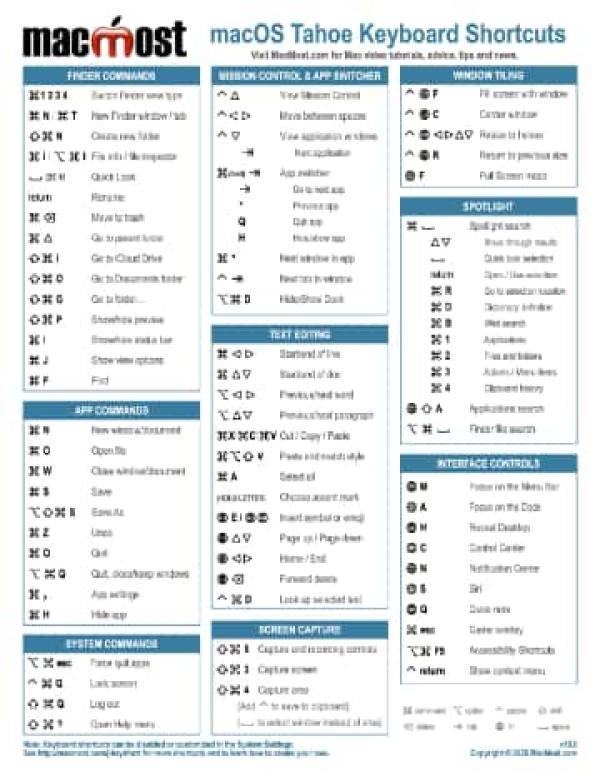
First let's talk about Apps. I have several apps open here and the easiest way to switch between the apps that I already have running is to use the App Switcher. That is simply to hold the Command key down and then tap Tab on your keyboard. The Switcher comes up and every time you use Tab you move forward on the list. Shift Tab moves backwards and then when you release the Command key whichever app is highlighted will move to the front. Now, of course, you can also switch apps lots of other ways. For instance, you can just click the window, if you can see it. So for instance here I see the Calculator window peaking through behind TextEdit. If I click that and it will bring that window to the front and Calculator is now the app that I'm using. But you could also switch to another app the same way you launch it. So when you go to launch an app, if it isn't running it will launch. But if it's already running it just brings that to the front. So, for instance, I could use the Dock here and go to Pages and you could see it brings all of the Pages windows to the front. Pages was already running. That's okay. It's just another way to bring things to the front.
Any other way you use to launch an app you could also use to bring an app to the front. So I could use Spotlight, Command Space, look for TextEdit, and then you could see it just brought that to the front. It was already an open app.
So Mission Control allows you to have multiple Desktops. I'm going to use Command Up Arrow here and you could see I have one Desktop. I'll add another and you could see I could move a window. Let's move TextEdit over to Desktop #2. Now I can use Mission Control to select the Desktop like that. I could activate it again with Control Up Arrow and go to Desktop #1. But I also have a couple of shortcuts to do this. Using Control and Right Arrow or Left Arrow will switch between these Desktops. Using four fingers on the trackpad I could swipe to the left or the right to go between Desktops. Now this also works with full screen windows. So let's take this Pages window full screen. If I look at Mission Control now you could see I've got two Desktops and a full screen app. Each of these is called a Space. So I've three Spaces. Use the same control for these. I can use Control Right Arrow to go between them and Control Left Arrow to go back. I can use four fingers on the trackpad to go back and forth between them or just go to Mission Control and select the one I want to jump to.
Now how about windows inside an app. So here in Pages I have three windows open. I can see that and one way to switch between them is by going to window. You could see these three windows here. So even if the windows are in different Desktops or maybe ones in full screen mode I can see all of them here and jump to one by selecting it. I could also use the keyboard shortcut, Command and then the back tic or tilde key, on American keyboards it's right above the Tab. If I use that it's like switching apps but I'm switching between the windows in the app that I'm currently using.
You also can use the Dock for this. So here's Pages. If I click and hold you could see the three windows I have open and they have little window icons next to them. Above that you'll also see recent documents. So these are documents that aren't open whereas these are documents that are and each have their own window. I could select one to go to.
You could also use Mission Control for this. If I use Control and Up Arrow notice that in addition to Desktop here at the top I see all of the windows in the current Desktop. So not just the ones for Pages but also in this case in System Preferences, there's TextEdit, and there's Calculator. So I don't have to switch Desktops here. I can just jump to a window by clicking on it. Go to each one. There's also a way to just bring up the windows in your current app. So I'm using Pages now. If I use Control and Down Arrow it will show me the windows for the current app and also other recent documents here at the bottom.
Now what about if you're using Tabs instead of windows. So in Pages I'm going to go to window, merge all windows, so now all of these are in one window and there are three different tabs. You can move between the tabs by simply clicking on the tabs like that. Also notice in Pages, under Window, these tabs are still represented here in the window menu. So I can jump to one that way. You could use special keyboard shortcuts which you can see here under Window. Show next tab is Control and then tab. Then control Shift Tab goes backwards. So Control Tab goes to the next tab and I can continue to loop through.
In Safari things are a little bit different with tabs. Under Window you won't see all the different tabs listed here in window. But you can use Control and then Tab to go between your tabs or Shift Control and tab to go backwards. Of course you can also click on each one of these. There's an additional set of shortcuts. Use Command and a number you can go a specific tab. So Command 1 goes to the first tab. Command 3 goes to the third tab. Command 9 will always go to the last tab. So 1-8 work for the first eight tabs and nine is always the last tab if you happen to have more than 9.
So as you can see you always have multiple ways to switch between things. Whether it's spaces, applications, windows, or tabs. There's always a way to do it with with mouse or trackpad and also a way to do it with the keyboard. Hope you found this useful. Thanks for watching.

Thanks Gary. This was massively useful. I've watched it over and over. Why dd I not take time to learn these functions a long time ago???
Regards
Mick
When my desk top has open windows open that I am using, I have an app called windowmizer. I double click top of a window or use command M and the window scrolls up. Do same to unscroll. It is very easy and I use it all the time. When Apple came out in the 80s it was part of the system. I don’t know why they stopped using it. It works with post it notes still but that’s it.