
The Finder Preview pane is an often-overlooked Finder tool that allows you to preview the files you have selected in the same window that you are using to browse and organize your files.
▶ You can also watch this video at YouTube.
▶
▶ Watch more videos about related subjects: Finder (338 videos).
▶
▶ Watch more videos about related subjects: Finder (338 videos).
Video Summary
In This Tutorial
Learn 10 tips for using the Finder Preview pane on your Mac to quickly view files, perform actions, and manage information without opening separate windows.
1. Use the Preview Pane As an Alternative To Quick Look (00:53)
- Shows file previews without blocking your workspace
- Lets you continue to drag, rename, and open files
- Unlike Quick Look, it stays visible as you browse
2. The Preview Pane Is Available In All Finder Views (01:29)
- Works in Column, List, Icon, and Gallery views
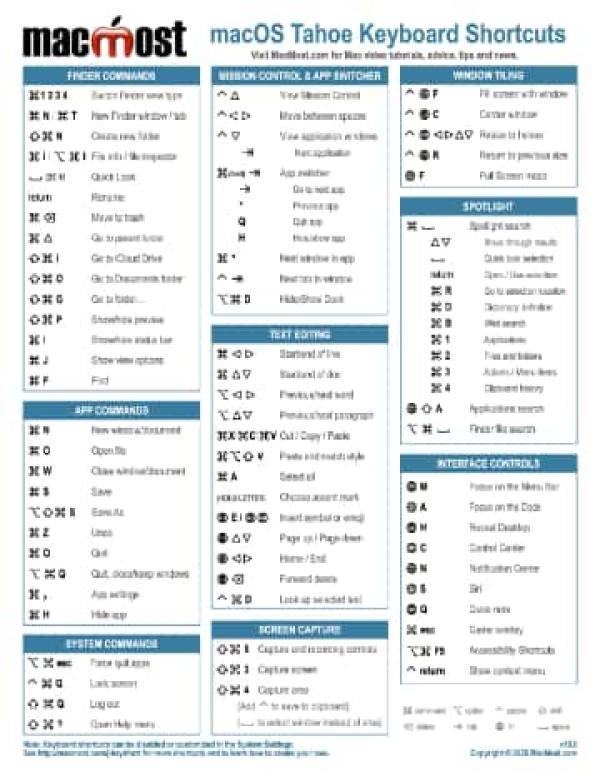
- Toggle it with View > Show Preview or Shift Command P
- Each view adapts the preview size automatically
3. The Preview Pane Updates As You Browse (02:29)
- Automatically updates to show the currently selected file
- Works with documents, images, videos, audio, and more
- Play media files or see live document previews
4. You Can Preview Media And Page Through Documents (03:01)
- Play video and audio directly in the Preview pane
- Flip through Pages or Keynote documents with arrows
- Browse multi-page files without opening them
5. Change the Size Of the Preview Pane (03:42)
- Drag the divider to resize the Preview pane
- Move it left for a larger preview, right to hide it
- Shift Command P or View > Hide Preview also turns it off
6. Customize Which File Information Is Shown By Type (04:18)
- Go to View > Show Preview Options to choose details
- Options change depending on the selected file type
- Select items like image resolution, device info, or dates
- Show More/Show Less toggles extended details
7. Use the Preview Pane To Add Or Remove Tags (05:47)
- Add tags directly in the Preview pane field
- Type a new tag or select from your list
- Remove tags by selecting and deleting them
- Provides quick tag access without opening Info windows
8. Easy Access To Quick Actions And Shortcuts (06:36)
- Quick Actions appear at the bottom of the Preview pane
- Top two actions get buttons, more are under the More menu
- Supports actions like Rotate, Trim, Convert, or Markup
- Customize actions and order in System Settings > Extensions
9. You Can Drag the Preview Or Into It (07:53)
- Drag the file preview to move or open files
- Useful when file icons are off-screen
- Preview also works as a drop zone for dragging into folders
10. Using the Preview Pane With Multiple Files (08:51)
- Select multiple files to see combined thumbnails
- Shows total size, number of items, and date ranges
- Selecting folders shows folder icon and combined sizes
Summary
The Finder Preview pane is a powerful alternative to Quick Look, letting you view, organize, and act on files without opening extra windows. You can resize it, customize its details, tag files, use Quick Actions, drag files in and out, and even view multiple files at once.
Video Transcript
Hi, this is Gary with MacMost.com. Here are ten tips for using the Finder Preview Pane on your Mac.
Now the Preview Pane is a feature of Finder Windows on your Mac. It allows you to preview the files selected and even perform some actions. So you've probably seen the Preview Pane before if you've ever used Column View in the Finder. Here you can see I've set this Finder Window to Column View. I've got a column here. I can click on a Folder. I've got another column here. Now if I select a file, of course, the next column isn't going to show the contents because it is not a folder but will show a preview of the file. So if I select this image here you'll see a preview of the image and some information below it. This is called the Preview Pane. By default you'll see it in Column View because it makes sense that it is the last column to the right when you have a file selected.
The Preview Pane is a great alternative to using Quick Look to preview files. With Quick Look you would select a file like this one. Press the spacebar and you get this other window here that kind of covers everything else up and allows you to be view the file. You can press the spacebar again and it will go away. But with the Preview Pane it doesn't get in the way with working with your file. You can still do everything here, like drag the files from one folder to another, renaming them, opening them and so on. So while Quick Look is one of the best features of macOS, the Preview Pane is sometimes better when you're browsing through your files.
Now the next thing you should know about the Preview Pane is that it is available not just in the Column View but also in all other views. So, if I switch to List View here and I select a file you can also bring up the Preview Pane here. It is under View and you'll see Show Preview. The keyboard shortcut is simply Shift Command P. So remember that and use it and you'll bring up the same Preview Pane here as you saw in Column View. Another Shift Command P will dismiss it. Here you could see it in Icon View as well. So I can select a file here in Icon View. Shift Command P brings up the Preview Pane. It even works in Gallery View. You've got a large preview, of course that's the whole point of Gallery View. But Shift Command P will also bring up the Preview Pane which knows to show you a smaller preview here. There's no point showing you the big one as you already have a much bigger one as the main point of the window. But you get the rest of the information that comes with the Preview Pane.
In addition to being a useful way to preview a single file and then perhaps dismiss it after you've taken a look, you can just bring it up and leave it there. It will show you whatever you have selected. So I'll select another file and I'll see the Preview Pane just shows me the information for that. Of course it works with a lot more than just images.
So I can look, for instance, at this Pages File here. I can look at this text file. I can look at this Keynote document here. I can look at this video file as well. Just about any file type. In fact, when you have media, like for instance this video here, you can actually play the video in the Preview Pane. The same thing with audio files. You can actually play the audio as well. When you look at some kind of documents, like for instance this Pages document here, you'll see little page turning arrows and you can flip through Pages. The same goes for a Keynote document. You can flip through the slides and preview it that way.
If you find these videos valuable consider joining the more than 2000 others that support MacMost through Patreon. You get exclusive content, course discounts, and more. You can read about it at macmost.com/patreon.
Now you may have noticed that the preview here is a little smaller than what we saw when we were looking at Column View before. You can actually adjust the size of the preview by simply dragging the line between the main part of the Finder Window and the Preview Pane. So I'll drag it to the left and it will make it larger all the way up to a certain point and then it kind of stops. You could have a pretty large preview if that's what you need or you can make it pretty small. Here's an additional tip. You can, of course, use View and then Hide Preview, or another Shift Command P to get rid of a Preview Pane. But also if you drag the line all the way to the right it gets rid of it as well.
Now you may notice here the list of information for this file underneath it. It gives you the name, the file type, the size. Then there's a bunch of different things like Created, Modified, Last Open Dates. Since this is an image it gives me dimensions and resolution as well. I can click Show More and get even more information. Since this is a photo there's a lot of information here. You can actually customize what information is shown by going to View and then there's an entry here for Show Preview Options. It's underneath Show View Options and doesn't have a keyboard shortcut. But if you bring it up you get this little window that will stick around. It will show you all the different things that you can see. Now all these things were available when I click that More button but you can include some of these things in the Default set by just selecting them here. So, for instance, if you want, say, the device made to be included or for the device model to be included for images you an by simply checking that there.
But note that this depends on the file type. So if I select a Pages document here notice how this changed. So now I see different things for a Pages document. If I were to select a video I'll see different things here as well. If I select an audio file it changes there. So each file type has its own set of information that will appear as part of the default set and then when you close this window you get the Show More, Show Less button there if you just want to see everything.
Now another thing you can do with the Preview Pane here is you can use it as a way to add Tags. So you just click in this field here. You can select a Tag from your list or just type one, even type a new one and it will add the tag. So this is just another way to add Tags in addition to selecting the file and then going to File, then Tags down here, or using the tags in the Sidebar or Command i and it will bring up the Info Window which has the same little Add Tags field there. The advantage of the Preview Pane is that if you have the Preview Pane turned On it's already there, sitting there waiting for you to use to add Tags or to view the current tag. So, for instance, here's a file that already has a tag. You could see it has that tag there. I can actually select it and Delete it if I wanted to, or I could type and add another one.
Now you may have noticed these buttons here at the bottom. These are Quick Actions. The same Quick Actions you get if you Control Click on a file. You go to Quick Actions here. Now different file types have different Actions. So an image here has the most. It has a Rotate Action here and you can actually use the Option Key and that changes to Rotate Right if you want. You have create PDF and under More you'll see additional Actions. So you've got Convert Image, Markup, and Remove Background for images. Let's say you select a video here. You're going to see different things. Like, for instance, Trim. Under More you'll see different things here as well including Shortcuts that you've created as Quick Actions. So what Show Preview basically does is give you a way to access your top two Quick Actions and a More button to access all the rest without having to go to a Context Menu or the Menu Bar. Also if you select More and click Customize here it will take you into System Settings to your list of Finder extensions. So you get to decide which shortcuts are included and which of the default ones are included. You can also drag these. So you can change the order and remember the top two spots are very important since there is room for individual buttons for those. Everything from 3 on will just be under the More button.
Now an interesting aspect of the Preview here is that it is draggable. Of course you can drag the file itself and say Move it here to the Desktop if I wanted to or move it into this folder. But you can also drag the Preview here. So I can drag the video preview and drop it onto the Desktop or move it into this folder which could be useful since this is a larger area to click and drag. It's also useful when the file is no longer visible. I can scroll down here and if I want to move it to this folder I can no longer see the file in the list to drag. But I can see the Preview and I can drag that. You can also, of course, drag to other places. Like into the Dock, into an App to open it. You can even do the opposite with dragging and dropping. I could select a folder here. Then I can see it in the Preview Pane. Then I could scroll where I can no longer see that folder in the list, but I can use this as a Drop Zone. So I can drag this file to the folder, like that.
Now the last tip I want to tell you about is how the Preview Pane can show you multiple files. First, of course, there's the whole idea of just selecting a folder. It's going to show you a folder icon here and you get a combined size of all of the files in there. But you could also select multiple files here in the Finder by clicking a file and then Command clicking another or Shift clicking to select a range and clicking with the Command Key held down again to Deselect. So whatever techniques you want to use to select multiple files. The Preview Pane will combine all of those thumbnails like this and also show you the number of items selected, the combined size for them, and information including ranges. It's showing you the range of dates.
So if you're currently not using the Preview Pane when you use the Finder, I encourage you to give it a try. Thanks for watching.

Very helpful video and as usual I learned things I never imagined existed.
Customizing the Preview pane for a Pages document allows one to select Key Words. When I turn this feature on, no info is displayed for a Pages document I created. Where do Pages Key Words come from? How would I add or edit them? Would adding them enhance searchability via Spotlight?
Chris: Do you mean tags? See https://macmost.com/an-introduction-to-mac-finder-tags.html