6/25/12
You can print both labels and envelopes from Address Book without needing to do a mail merge or use another app. You can choose from many different standard label templates or create your own. You can also choose different envelope sizes. You can print them in bulk, or just use this feature to print a single envelope.
6/22/12
When taking your US Apple products to Europe, you only need to bring a simple and cheap plug adapter. The power adapters that come with MacBooks, iPads, iPhones and iPods are all universal adapters that work with 100V to 220V. There is no need for an expensive and heavy power converter.
6/20/12
Learn to use header and footer rows in iWork Numbers. Footers allow you to easily perform functions, like sums and averages on entire columns. Headers can remain at the top of the screen as you scroll. Both can be used to keep calculations and titles separate from sorted data in the body of a spreadsheet.
6/18/12
iCloud services are tied into apps like Mail, iCal and Address Book. But you can also access your data through the iCloud.com web site. This allows you to get your email and access your events and contacts even when you are using a computer that doesn't have iCloud. The web-based apps are very sophisticated, offering almost the same functionality as the full apps, and often more functionality than the iOS apps. You can also use iCloud.com to transfer documents between your Mac and iOS devices, even in Lion.
6/15/12
Mac cleaning apps are being advertised heavily across the Internet. But do you need these programs? Some of what they do is already being done by OS X. And most of the rest is simply an effort to remove a small number of files from your drive and give you more drive space. But you can do better by archiving projects and keeping your documents tidy on your own.
6/13/12
Many people often wonder what export settings to use in iMovie in order to create the best DVDs. But DVDs are standard definition, and any video you export from iMovie will be re-encoded into a special DVD format. So it is merely a matter of exporting at the best settings available and then letting your DVD software use the best version of the video possible to create the DVD.
6/11/12
At the Worldwide Developer Conference Apple announced the next generation MacBook Pro complete with a retina display, the first Mac to get such a screen. In addition, Mountain Lion's release date was specified as this July, and iOS 6 for iPhones, the iPod touch and the iPad was announced. The new iOS will feature Facebook integration, a new Maps app and other new features.
6/8/12
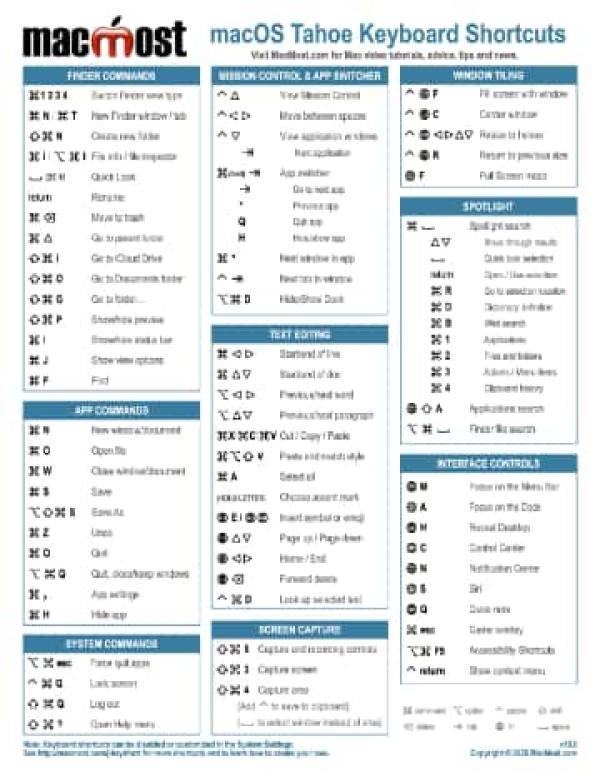
If you are a recent switcher to Macs, you may be having trouble adjusting to the Apple keyboard and the way keyboard shortcuts work. Learn about the Command key and how to get to some basic keyboard shortcuts. Learn the Mac equivalents to how to change a file name, copy a file and Control+Alt+Delete.
6/6/12
After you have made many iMovie projects, you may want to remove them from your projects and events lists. This can be as easy as just moving the folders and files from your movies folder. If you want to go back to that project, simply move the files and folders back to their original locations.
6/4/12
While you may never need to go into your Mac's Library folders, it can be enlightening to know what they are used for and what is inside. This is where things like fonts, caches, preferences files and application support files are stored.
6/1/12
If you carry around USB flash drives, you may want to consider password protecting them in case they are lost or stolen. It is easy to format a drive with encryption using the OS X Disk Utility app.
5/30/12
Learn how to make playlists of your favorite songs and share them with friends. You can burn various types of CDs. You can also share your playlist online with friends using Ping, or gift a whole custom-made album of music to a friend.
5/25/12
Learn about the different hard drive formats like Mac OS, NTFS and FAT32. Find out how you can use NTFS drives with a Mac, and Mac OS drives using Windows. See how FAT32 formatted drives can be used to store files accessible to both systems.