It is finally time for the MacWorld rumors to start flying. We’re only two weeks away from the big show now, but it no longer seems like a big show with Steve Jobs sitting it out. Expectations for Apple announcements are low.
The most outrageous rumors have to do with Apple announcing a new mini-laptop netbook or an iPhone Nano. Other rumors tell of new iMacs or a new Mac Mini. But more sensible rumors say that Apple VP Phil Schiller will simply talk about Snow Leopard during his keynote.
Outside of the rumors, there is little news. In Britain, Mac users finally get the BBC iPlayer on Macs. This application is used to view BBC programs on computers and the BBC received criticism for originally making it Windows-only.
The MobileMe service seems to be receiving continuous attention from the developers as Mac OS X 10.5.6 introduced some speed improvements for syncing data — and the Web applications in MobileMe also received updates in the past week.

Some rumors are going around that Apple will release a netbook next year. But there are many reasons why this simply won’t happen. The rumors are the result of wishful thinking by people who love the concept of a netbook and would naturally like to see one from Apple.
A netbook is a small ultra-portable laptop that is very inexpensive. A typical one costs less than $500 and weighs less than 3 pounds. They have very small screens and slow, energy-efficient processors. They are called netbooks because they are primarily for email and Web surfing, not for processor-intensive applications or development.
I love them too, and wish Apple would come out with one. But here is why they probably aren’t even considering it.
So don’t hold your breath for a Mac netbook. I’m sure Apple has a iPod Touch “plus” or “pro” as a prototype somewhere, and maybe that will emerge one day. But I think the only budget Mac that will be available for a long time will be the Mini. Look for an update to that in January.

A quick look at eleven iPhone games, including Fieldrunners, Pac-Man, SinkSub, Touch Physics, Idle Hands, Ocarina and more.

Big news this week as Apple dropped a bomb on the Mac community by announcing that there will not be any Steve Jobs keynote at this year’s MacWorld Expo. Even more shocking was the fact that Apple won’t be at next year’s MacWorld Expo at all.
Not only is this the end of an era for Apple and our community, but it probably means there aren’t going to be any big announcements in January, either. See this blog post about it.
The Mac OS X team was busy this week with the release of Mac OS 10.5.6. This consisted of lots of bug fixes, and much faster syncing for MobileMe users. There were also some security patches involved, so make sure you run Software Update.
It’s also time for last-minute holiday shopping. You can get some good gift suggestions for Mac and iPhone users in our latest gift guide.
We’ve also released a new set of iPhone ringtones this week, featuring Los Angeles artist and podcaster Anji Bee.

Check out some gift ideas for Mac and iPhone users that cost less than $50: headphones, headsets, cooling pads, media readers and even a game.
The MacWorld Expo will go on next month as usual, but without Steve Jobs. Instead Apple Senior VP Phil Schiller will make an address. I’m sure nothing ground-breaking will be announced.
In addition, Apple said this is the last time they will participate in the MacWorld Expo, which is, after all, an independent event, not something Apple owns.
Apple stated today:
…trade shows have become a very minor part of how Apple reaches its customers. The increasing popularity of Apple’s Retail Stores, which more than 3.5 million people visit every week, and the Apple.com website enable Apple to directly reach more than a hundred million customers around the world in innovative new ways.
So why this change? I think it is simply that Jobs and Apple are growing tired of having to conform to an annual schedule of producing huge announcements. Instead, they’ve been working hard to prove that they can have their own “MacWorld keynote” whenever they want, as Jobs did several times over the last few years with special events held at the Apple campus.
This is probably a good year to start, too, as the lack of rumors and the recent refresh of most of the Apple Mac line and iPhones makes it obvious that Apple didn’t have anything to announce. They can’t have Jobs going up there to announce “Snow Leopard is still coming” or a new video adapter cable.
I think what we’ll see from now on is periodic events held at Apple that are also broadcast to Apple stores worldwide.
Oh, and then there will still be the WWDC — the Apple Worldwide Developers Conference. But that is something Apple has complete control of. They’ve shifted the dates around for that many times, and can even be expected to skip a year here or there, as Microsoft has done with their comparable conference.
So this is probably all about Apple taking even more control over their message. Not just what that message is, but when it arrives as well.


Another slow news week as Apple probably isn’t going to announce anything new until the MacWorld Expo in early January.
But the iPhone sales division does seem to be busy. AT&T is now allowing customers to order iPhones online, and then activate them at home. Apple started allowing people to purchase iPhone gift certificates a few weeks ago as well, giving you two ways to surprise someone with an iPhone under the tree this year.
In addition, rumors are flying that Walmart will soon start offering iPhones. This may be a good place to put iPhones since a lot of medium-sized cities and towns in the U.S. don’t have an Apple store, but they usually have a Walmart.
Iconfactory engineer Craig Hockenberry, who worked on the iPhone apps Frenzic and Twitterific, wrote an open letter to Steve Jobs complaining about how there are so many free and 99 cent applications in the iPhone App Store that developing more useful and complex apps is becoming uneconomical. He has a point. You can read his letter here.
If you were lucky enough to get an new MacBook of any flavor in the last few months, Apple has a firmware update available through the Software Update feature of Mac OS X. Looks like it mostly fixes issues with the power adapter and battery indicator lights.
Surveys of market share come out all the time. This week, one appeared that put Mac at almost 9 percent of all the users out there. That’s a pretty high number, considering that it wasn’t too long ago we were under 5 percent.
Even more surprising is that on the Web, Internet Explorer, the main Windows-only browser, is now under 90 percent in browser share. This means that Firefox is gaining and has a real foothold.
So looking just at the first number, consider that 9 percent. That might not be too impressive if you look at it from an OS stand-point. It means that Windows has around 90 percent. That’s extremely dominant.
But if you look at it from a hardware stand-point, it is interesting. Pretty much all of the 9 percent is Apple hardware. But of the other 91 percent, the hardware is divided into a number of manufacturers: Dell, HP, Lenovo, Acer, Toshiba, and so on. I haven’t seen any recent numbers, but I’d have to imagine that Apple is near the top of that list as far as machines sold.
But what the increasing Mac market share, and decreasing IE dominance, mean for us is that hopefully Windows-only Web sites and applications will be a thing of the past. Microsoft itself has shown a great commitment to this with the latest release of Office for Mac. And Electronic Arts at least seems to be trying hard to include Macs as an available platform for every new game.
I think the software industry is doing a good job of including Mac versions right alongside their Windows ones. In addition, hardware is getting better too. There are still some manufacturers that don’t seem to provide Mac drivers or support. And then there are some that do strange things like Fujitsu who offer Mac-specific scanners instead of making their scanners compatible with both Mac and Windows.
Even online media seems to be paying attention to Mac more and more — for instance both Amazon and NetFlix made sure to work on versions of their media players that work on Mac.
But Apple still has work to do to get the word out about this. For instance, I tried to convince a friend of mine to get a Mac instead of a new PC and his biggest fear is that he won’t be able to open his old Word and Excel files, even though I told him about how TextEdit can do it, iWork can do it, OpenOffice and NeoOffice can do it, and he can also get Microsoft Office for Mac for probably less cash than Office for Windows.
Until perceptions like this change, it will be harder and harder for the Mac to gain market share.


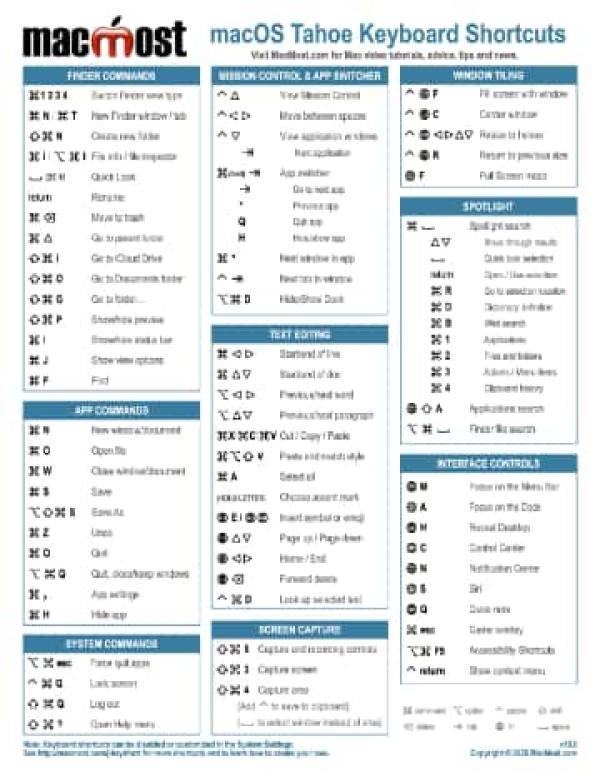
Learn how to control the Mac OS X Finder using only the keyboard. You can navigate through the menu bar, menu bar status items, Finder windows and even the Dock.

The holiday season got off to a good start for Apple, with strong Black Friday sales. This was despite the fact that sales deals offered by Apple on that day were no more special than those in previous years. One interesting addition to the Apple offerings is a gift card good for the purchase of an iPhone. This solves the problem of how to surprise someone with an iPhone while being required to sign up for service before leaving the Apple Store.
Apple continued into the holiday season by offering free shipping on Monday — traditionally a day for special sales from online stores.
Topping Apple news this week was the hoopla over a report claiming that an old Apple knowledge base article was instead a call from Apple for Mac users to start buying anti-virus protection. You can check out the MacMost blog post for details.
Lots of news items about Mac viruses this week, despite the fact that no new virus was involved in any of the news.
It seems that an old tech note about using multiple anti-virus software on Macs was taken as an official word that Apple is now recommending the use of anti-virus software on OS X. It looks like the first mention might have been in a Washington Post column on Dec. 1. And then it was picked up by at least 100 other journalists and bloggers.
But the recommendation was actually an Apple knowledge base article that was a year old, and simply had a modification date shown as November 21. The article was very vague, and simply states: “Apple encourages the widespread use of multiple antivirus utilities so that virus programmers have more than one application to circumvent, thus making the whole virus writing process more difficult.”
But what does that mean? Does it mean that YOU should be using multiple AV utilities? Or does “widespread use” mean that Apple encourages many vendors to provide AV utilities. Certainly the second one makes the most sense.
If there was one Windows AV program that everyone used, then virus creators would simply build viruses that would circumvent that one program. But because there are dozens of AV Windows programs out there, all being updated by different teams, it is very hard to create a virus that gets through enough of them to cause a problem. So having more than one AV program with good marketshare makes sense.
Apple has reacted quickly to this re-reporting of its knowledge base article by removing the article and declaring it inaccurate. Apple spokesperson Bill Evans told CNET that Macs don’t need anti-virus programs because “The Mac is designed with built-in technologies that provide protection against malicious software and security threats right out of the box.”
And lets face it, there is no threat. There is no virus infecting Macs with OS X. None.
From time to time we hear about a “new Mac virus” but it always turns out to be a proof-of-concept idea by someone, or a malicious program that requires you to go through several steps and warnings before it causes any harm — hardly “viral” by definition.
Why are Macs so immune to viruses? Well, there are several reasons.
One is that the core of Mac OS X is Darwin, which includes a lot of open source code. Open source code is generally considered more secure than closed source, because it can be reviewed by any programmer or security expert who can help improve it.
Another reason is Apple’s dedication to update Mac OS X quickly whenever a possible issue arises. Several times we’ve seen proof-of-concept malicious software appear and Apple patch OS X quickly in reaction.
Of course a big reason is also marketshare. By definition a virus needs to infect others and spread. If 90% of the personal computers out there are using Windows, then it makes more sense for virus creators to target that platform.
So how long will be be safe from viruses? I think there is considerable lag in the virus world. Any time I have had to disinfect a PC, it always seems to have viruses from years past on it — ones created in 2000, 2003, or whatever. The machine I am disinfecting is also usually very out of date, using an old copy of Windows and not updated with patches properly.
So even if we saw the first real OS X virus in 2009, I think it would take years for it to become a common problem. And that would only happen if Apple decided not to react quickly and provide us with updates, which isn’t going to happen, realistically.
So, do you need to buy some AV software for your Mac? I say no. If a real threat appeared, Apple would most likely provide us with a patch and a way to remove the virus. So don’t waste your money.
AV software and the Mac vs. PC debate are heated subjects. If you agree or disagree, leave a comment below and let me know what you think.