
3/4/15
When you compose a new message in Mail, you are usually spending a very short amount of time in the Mail composition window and it is easy to miss some of the features. At the top of the window you can use various buttons and add more. You can also change the fields available to you, such as adding or removing CC and BCC fields and even a REPLY-TO field. In the message body area, you can use styling and also mark up images and PDFs.

3/2/15
You can change your default search engine in Safari to Google, Bing, Yahoo! or DuckDuckGo. The latter offers no-track searching and a variety of other features. You can use "bangs" like !apple to quickly search inside popular websites. You can also set it as your default on iOS.

2/25/15
With iCloud, you can create shared family calendars that appear on your Mac and iOS devices. You can add anyone with an iCloud account to the calendar and they can view, edit and add events. This makes it easy for a family to stay organized. You get notifications when someone changes the calendar. You can create many of these calendars for different subjects or different groups of people to share. If someone does not have a Mac or iOS device, it may be easier to use a Google calendar instead, which can still be accessed in the same Calendar apps on Apple devices.

2/23/15
The Font Panel can be accessed and used in apps like Pages, TextEdit and Mail to change the font and style of currently selected text. You can also save font settings a 'Favorites' in the Font Panel and then easily access those particular styles later. These Favorites will remain in the Font Panel across all of the apps that use it, so you can set up favorites that you use often and access then easily in different apps. You can also customize the font sizes shown in the Font Panel.

2/18/15
If you have purchased a new Mac recently, it comes with USB 3 ports. These look just like USB 2, but are much faster. If you are still using USB 2 external drives you will want to consider upgrading as the speed difference is worth the price. Thunderbolt may seem like an even better option, but unless you are paying a lot for an SSD, the speed of standard drives will give you the same results between USB 3 and Thunderbolt, so you may as well go for the much cheaper option.

2/16/15
Learn about the basic features of iCloud and what the service provides. This video is a good starting point for those asking the question 'What Is iCloud.' It will tell you briefly about services like iCloud Drive, Contacts, Calendars, Note, Reminders, Mail and other features of Apple's iCloud service.

2/11/15
The latest version of GarageBand allows you to create drum tracks using various settings rather than picking a fixed drum loop. You can select a drummer, and then change the style, which drums are used and many other factor to create a unique drum loop for your project. If nothing else, the drummer function in GarageBand is fun to play with!

2/9/15
Text Replacement is a built-in function on your Mac that allows you to automatically replace one sequence of characters with another. You can use them to fix common typos, make it easier to type long phases, or even allows you to insert longer passages you commonly use when writing. They can also help when trying to type special characters or emoji. Text Replacement works in most apps though some have special settings.

2/4/15
If your hard drive is close to full you may want to look through your hard drive to find out which files and folders are using the most space. You can do this by using List view in the Finder, along with the Calculate All Sizes option. You can also search for large files. Finding large folders and files may give you the chance to archive or delete things taking up a lot of space that you don't need any longer.

2/2/15
Many new Mac users try to use the buttons at the top of windows to minimize the window and send it to the Dock, when what they really want to do is to hide the whole app. It is usually quicker and more effective to hide an app using Command+H than to minimize a single document window. Learn the difference between minimizing and hiding and when to use each. Another option is to quit the app knowing that the document windows will reappear when you launch it again.

1/28/15
By using iCloud.com you can access your iCloud Drive files from any computer. Some files, like Pages, Numbers and Keynote can even be edited and updated right in the web browser with web-based versions of those apps. Other apps allow you to store finished versions of projects, such as iMovie videos, and access them from iCloud.com. Using the iCloud.com interface, you can rename or delete files from your iCloud Drive folders.

1/26/15
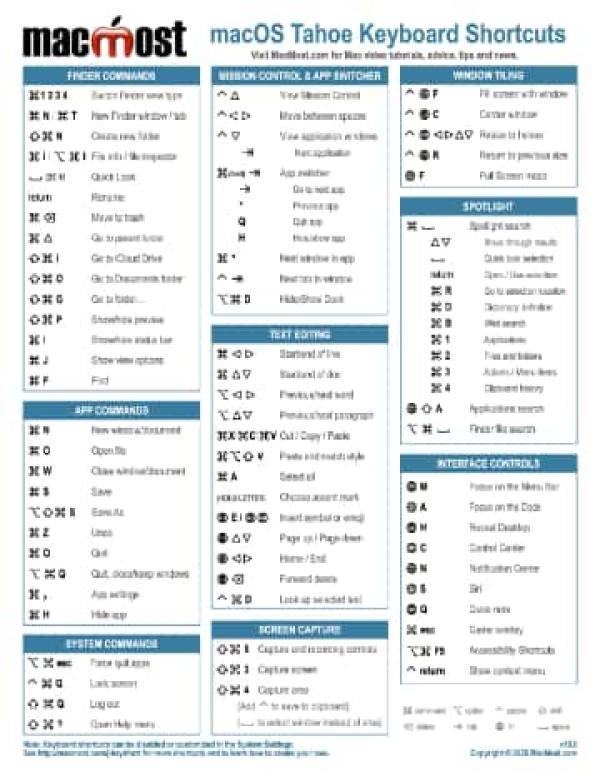
You can almost completely control your Mac using just your keyboard. Many keyboard shortcuts offer you a way to access functions without using a mouse or trackpad. You can even access the menu bar and buttons in dialog boxes with the keyboard. You can jump right to folders in the Finder by typing the folder's path. You can also create your own keyboard shortcuts.

1/21/15
If your iPhoto library is huge, one way you can cut it down is to remove all of the videos and store them elsewhere. But finding and then deleting videos in iPhoto can be tricky. You'll need to create a smart album, and then flag the videos before using a hidden command that moves all flagged items to the trash.

1/19/15
You can change the alert sound on your Mac using System Preferences. There are a variety of built-in sounds to choose from. You can also import your own sound files by placing them into a special folder. These files must use a special format, or at least have the file extension set to that format.