
2/22/17
The Help menu can be used in all applications to find other menu commands. The search function in the Help menu will return any menu command that contains the keyword, which will help you locate commands buried deep in submenus.

2/21/17
The Help menu in Mac apps can be used to access app documentation. Some Apple apps come with extensive documentation that users do not realize even exists. You can search the documentation, or read through it by topic to discover features.

2/20/17
The Merge function in Sierra's Finder will allow you to merge two folders, keeping the latest versions of each file. The trick is to arrange the folders so they have the same name and use a temporary folder to place them both into.

2/17/17
In Sierra if you look at your hard drive storage you may see an item labeled Purgeable Space. The files here would include downloaded media and documents in iCloud Drive that Sierra knows it can safely remove if space is needed. There is no need to try to manually manage Purgeable space as macOS will clear them and re-download them as needed.

2/16/17
If you need to share a single image quickly and easily, without using iCloud, Dropbox or some other service you have set up, you can use Imgur.com. You can upload an image without signing up and then use that to share you images in emails and message boards where images may not normally be supported.

2/15/17
A key skill every Mac user should master is how to select multiple items. In icon-based situations like the Finder or Keynote, you can drag a rectangle around items. In icon and list-based situations you can select multiple items using the Command and Shift keys.

2/14/17
If you have ever wondered how data gets from a website to your Mac, you can use Traceroute to see the full path data takes through the Internet. You may be surprised by how many hops it takes to load a webpage. Viewing a few trace routes will help give you an appreciation for how complex the Internet we take for granted can be.

2/13/17
Rulers in Pages can also be using in Page Layout mode, where you can have both horizontal and vertical rulers. You can use these rulers to create guidelines for easy alignment of objects. You can also have the origin point of rulers centered on the page instead of to the left and top.

2/10/17
Learn how to show rulers in your Pages documents so you can control the margins and paragraph indents. You can also use rulers to add tab stops.
2/9/17
Demonstrating iPhone panos at a spot along the coast just south of Abel Tasman park in New Zealand. The noise you hear are cicadas, I think. You can see the images I took here: <a href="https://imgur.com/a/iFsVs" rel="nofollow noopener" target="_blank">https://imgur.com/a/iFsVs</a>

2/9/17
In Applications/Utilities there is an app called Activity Monitor that allows you to track all of the apps and other processes running on your Mac. You can see which ones are using the most CPU, memory, energy, disk access, and so on. While this is useful for software engineers, it isn't really that helpful for typical Mac users.

2/8/17
If you having trouble figuring out which emoji characters to use in Messages, you can use the handy search function to look for them by keyword. It can be tricky, however, as you often have to try multiple keywords to find what you are looking for. You can also move the cursor over the text to see the exact description of the character before you decide to use it.

2/7/17
While e-books in iBooks are not supposed to be a substitute for audiobooks, it is possible to get iBooks to speak text to you. If you select enough text, you can make this an occasional alternative to reading with your eyes.
2/6/17
I'll be posting lots of Apple-tech travel videos in the next two week or so. If you have any questions about how I'm using technology on this trip, let me know and I'll try to answer it. Basically, I'll be using my iPhone 7 plus and an old MacBook Air as I travel throughout the south island of New Zealand.

2/6/17
If you need to grab the entire contents of a webpage, not just the visible portion, you can do so easily with the Export as PDF or Print functions. This saves the contents of the page as a single PDF file, which can be easily viewed offline and on other devices. This comes in handy for students who need to take online notes with them.

2/3/17
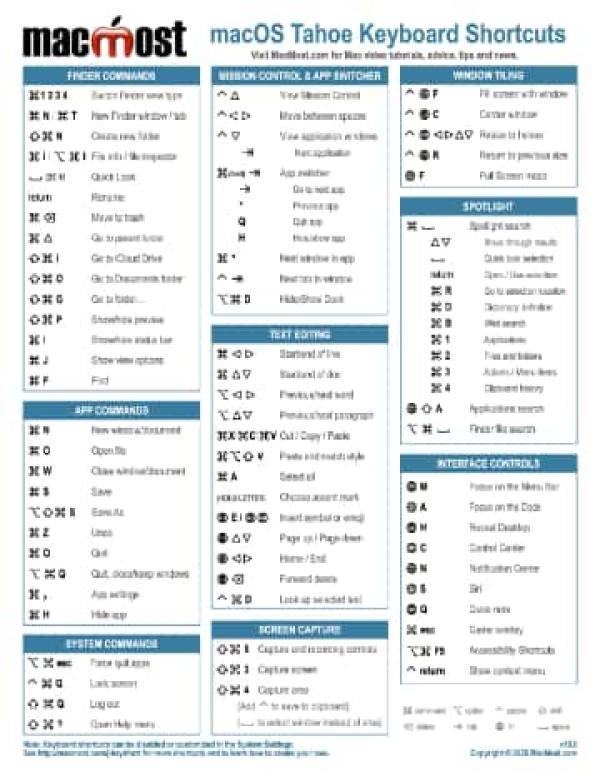
If you'd rather not take your hands off the keyboard to access the Mac menu bar, you can execute any menu command using a keyboard shortcut. You can then use the arrow keys to navigate through the menu items and Return to select one. You can do something similar with the Dock as well.

2/2/17
If you want to upgrade the memory in your older Mac, you can find the information you need on the Apple website. Apple maintains specific pages for different types of Macs. You can find out what type of memory you need to buy and how to install it.